Mattoon-Woodrow House


Basic details
Background
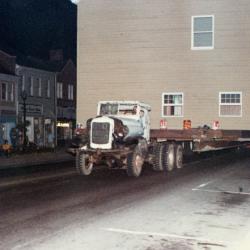
The Mattoon-Woodrow House (also known as the Ladd-Mattoon House), located at 72 E. North Street, is shown in 1995. According to Jennie and Robert McCormick’s Worthington Landmarks (1992), the structure was built for Ansel Mattoon, a local blacksmith and wagonmaker, sometime between 1833 and 1844 at its original location at the southwest corner of High and North Streets. The house was moved to 72 E. North to make way for a gas station to be built in 1932.
Ansel Matton is described as “Worthington’s foremost abolitionist” in Frank Corbin’s Walking Tour of Worthington (1969, p. 99), and this house was used as both a meeting place for the Anti-Slavery Society of Worthington and as a waystation on the Underground Railroad. Corbin speculates that Mattoon may have helped to transport enslaved people northward along High Street to the property of Ozem Gardner, another noted abolitionist who maintained an Underground Railroad waystation.
Mattoon sold the house in 1854 to Rev. Thomas Woodrow, who served as the pastor of Worthington Presbyterian Church from 1849-1857 and was an abolitionist and the grandfather of future United States President Woodrow Wilson.
Subjects
Record details
Copyright

Mattoon-Woodrow House from the collections of the Worthington Historical Society (WHS) may be used for educational purposes as long as it is not altered in any way and proper credit is given: "Courtesy of the Worthington Historical Society, Worthington, OH." Prior written permission of the WHS is required for any other use of Mattoon-Woodrow House. Contact WHS at info@worthingtonhistory.org to request permission.