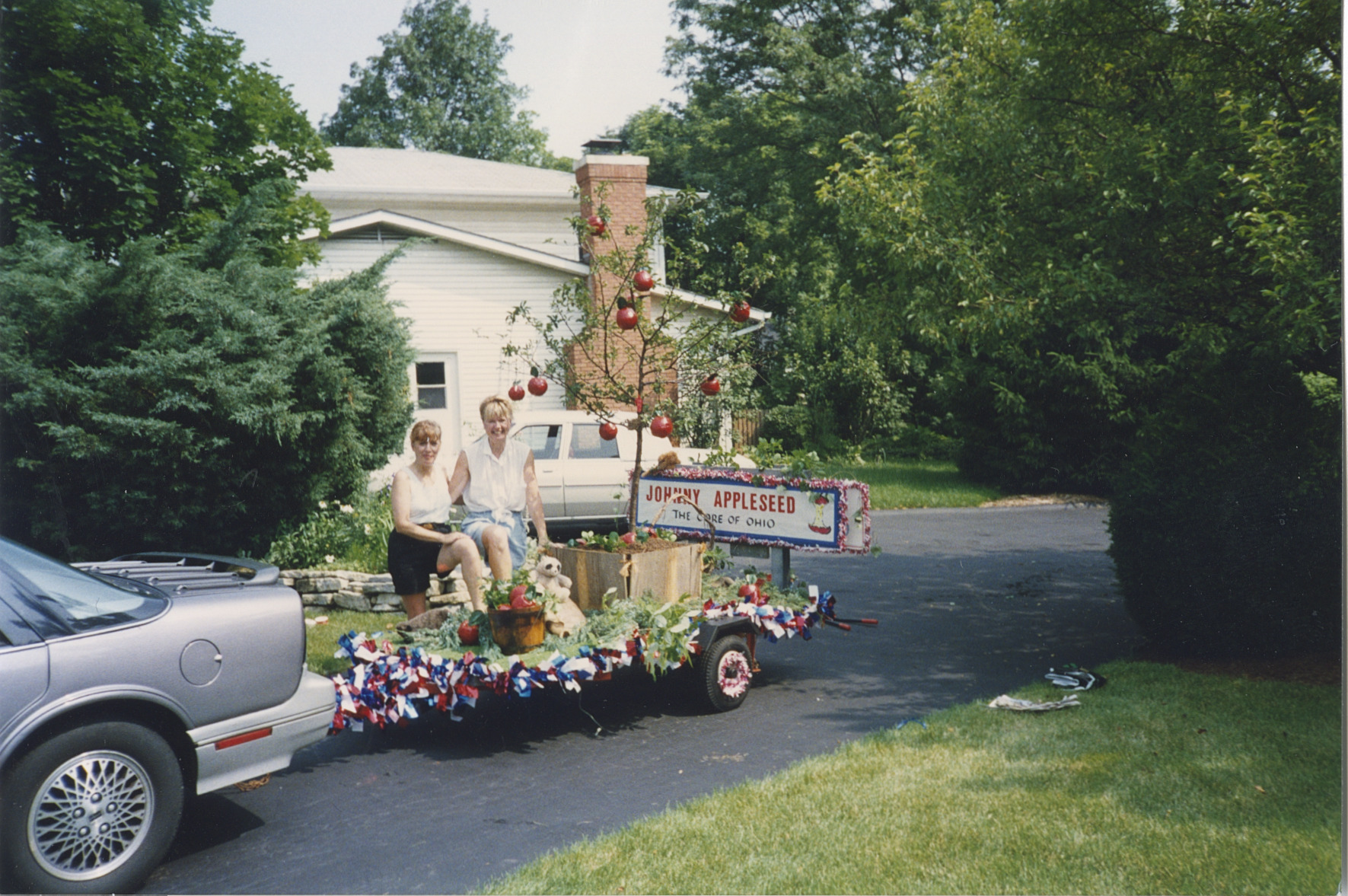
Worthington Hills Garden Club Parade Float for Worthington Hills Fourth of July Parade, 1988
Basic details
Background
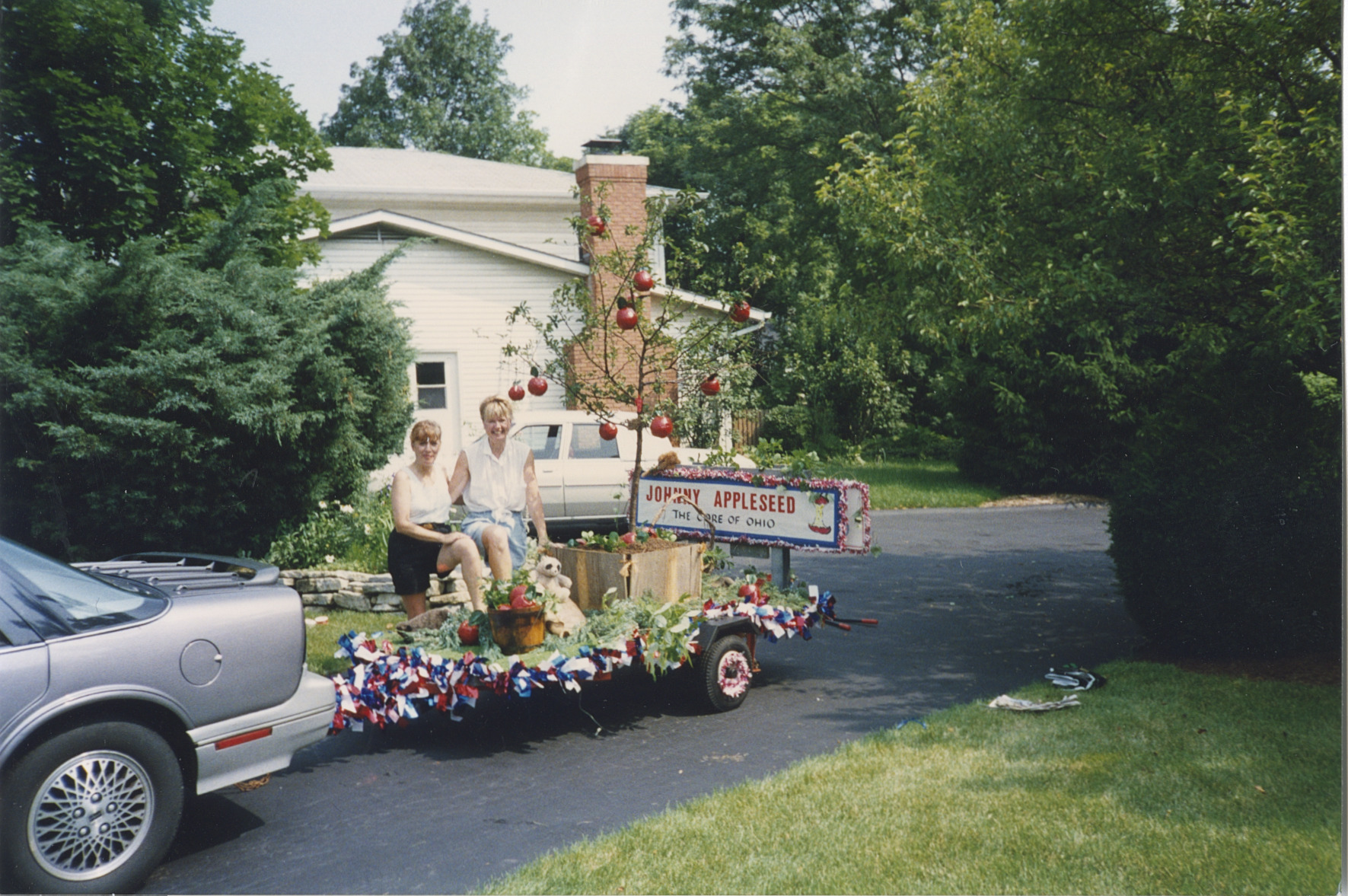
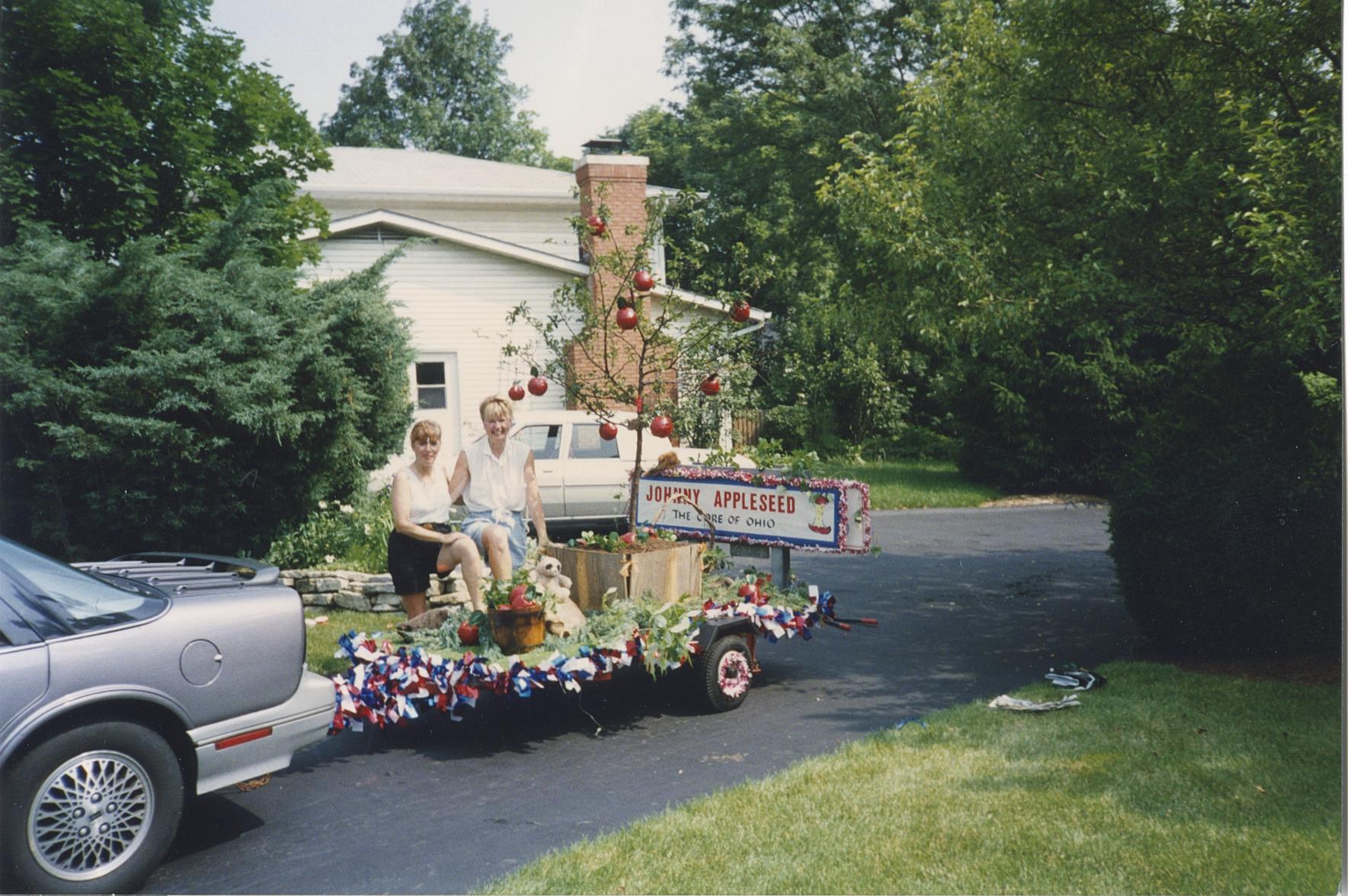
This color photograph shows two unidentified people with the Worthington Hills Garden Club entry in the Worthington Hills neighborhood's first Fourth of July parade, 1988. The people smile at the camera from behind the float, which features an artificial apple tree and basket of apples, along with a sign that reads "Johnny Appleseed/The Core of Ohio." The float is hitched to the back of a car, with another car and portion of a home visible behind them.
The neighborhood that would become Worthington Hills was purchased by Christopher Tone from Eri Bristol in 1841, according to the book "Worthington Neighborhoods" by Jennie McCormick. The Tone family moved from New Hampshire to Ohio, with Minor P. Tone continuing to farm on the land following his father Christopher's death in 1850. In the 1950s, Raymond E. Mason began purchasing the land that would form the neighborhood, transferring it in 1960 to "Olentangy Country Club Estates" to launch the concept of a neighborhood build around a golf course.
The neighborhood was platted between 1963 and 1968, and according to McCormick, offered "resort living around its own golf course and amenities for family living for which most homeowners in 1966 could only dream." Homes were typically larger than average, and more than half were totally air-conditioned. Some homes were "quiet conditioned," which featured insulated plumbing, noise-reducing baffles on heating systems and sound-proofed family rooms.
This photo is from the collection of the Worthington Hills Garden Club (WHGC), which was formed in 1967. Active from the beginning, the club held flower shows and home and garden tours, as well as sponsored planting events at nursing homes and schools. Today, WHGC membership is open to residents and non-residents of Worthington Hills, and the club sponsors tours of central Ohio sites, promotes conservation and a love of gardening, supports charitable causes and invests in natural areas such as the Sawmill Wetlands.